Science to action

Climate-resilient reefs are already shaping conservation, policy and investment around the world. See what governments and the international community can do now, who has already committed, and how the science is being put to work on the ground.

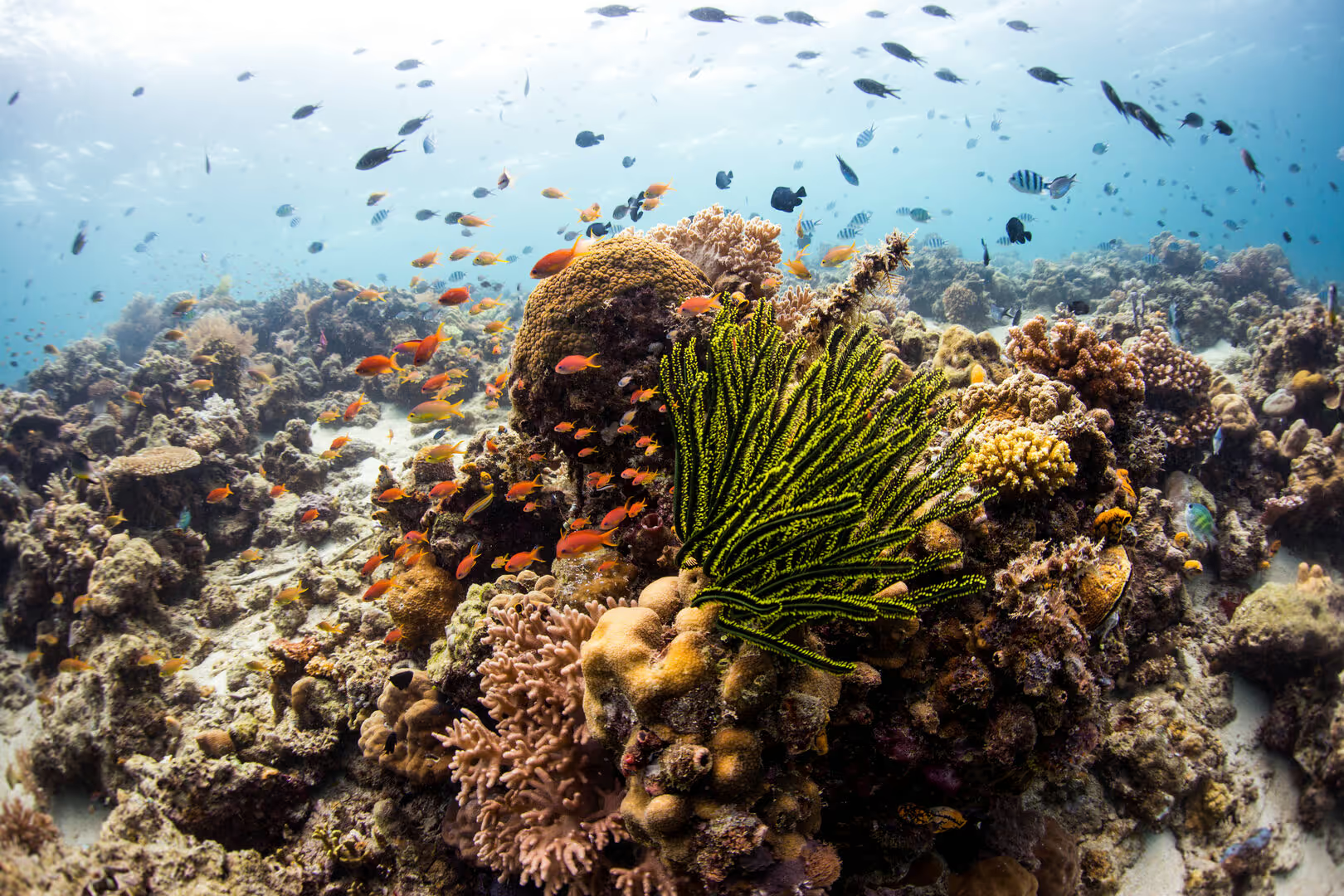
Shallow coral reef with schools of small orange fish and a feathery crinoid in clear blue water.
Two divers in wetsuits on a boat reviewing reef survey notes on a clipboard.Smiling man in an orange shirt standing on a sandy beach holding snorkelling fins.

Three priorities for international cooperation

Protecting climate-resilient reefs takes more than national action. The international community must step up, with finance, science and coordinated political commitment, to back the countries and communities already leading the way.

1

Finance the communities and countries on the frontline

Scale up public and private finance for reef protection, management and community-led stewardship. Align climate adaptation finance with coral reef outcomes so that reef-dependent nations can access the support they need.

2

Phase out fossil fuels to give reefs a future

Local action must be matched by global action on climate change. The international community must rapidly phase out fossil fuels and limit warming to 1.5°C, the threshold above which mass coral bleaching becomes the norm. Delivering the most ambitious commitments under the Paris Agreement is the single most important contribution the world can make to the long-term survival of coral reefs.

3

Embed reefs in global climate and biodiversity frameworks

Make sure climate-resilient coral reefs are explicitly referenced in outcomes of the UN climate convention (UNFCCC) and the Convention on Biological Diversity (CBD), in guidance for Nationally Determined Contributions (NDCs), and in 30x30 implementation frameworks. Use 50 Reefs+ science and Global Coral Reef Monitoring Network (GCRMN) data to anchor international targets in the best available evidence.

Countries already taking action

Governments, communities and partners are already putting climate-resilient reef science to work. Select a pin or an example to explore.

Action under way
13 examplesSelect a pin or a row
A parrotfish swimming over coral on a reef in Fiji.

Cuba, Fiji, Indonesia, Madagascar, Philippines, Solomon Islands, Tanzania

Protecting Key Reefs Across 7 Countries

Priority reefs in the Philippines, Solomon Islands, Fiji, Indonesia, Tanzania, and Madagascar, plus Cuba through non-GEF funds. Part of Coral Reef Rescue, a WWF-GEF project delivered with the University of Queensland that helps build capacity and solutions for safeguarding reefs in the 7 countries, including knowledge-sharing, community convening, and long-term financial planning.

Read more at WWF ↗
A scuba diver attaching small pieces of coral to a dome-shaped nursery frame on the seabed.

Belize, Guatemala, Honduras, Mexico

Growing resilience in the Mesoamerican Reef

Mesoamerican Reef within the Caribbean Sea, including the coasts of Mexico, Belize, Guatemala, and Honduras. This WWF conservation project focuses on building agricultural and coastal resilience, improving freshwater management, and protecting reef ecosystems through climate and reef health monitoring, reef restoration, wildlife and mangrove conservation, and reducing impacts from fishing, tourism, and agriculture.

Read more at WWF ↗
A snorkeller carrying coral fragments back to a field lab to test their heat tolerance.

Indonesia

Stress-testing corals to inform protection in Raja Ampat

On Misool Island, YKAN and research partners are testing how corals respond to heat, alongside modelling of ocean temperatures. The results are intended to inform marine protected area planning and help identify coral sources for future restoration.

Read more at TNC ↗
A shallow coral reef off a small island in Indonesia.

Indonesia

Koralestari: financing reef protection and reef-positive businesses

YKAN’s Koralestari initiative is developing financing models for long-term marine protected area management while supporting businesses that reduce pressure on reefs. The programme focuses on the Savu Sea, Berau and Lingga and is planned to run from 2024 to 2029.

Read more at YKAN ↗
A healthy branching coral on a reef identified as a potential refuge from marine heatwaves.

Belize, Hawaiʻi, Marshall Islands

Super Reefs: finding corals with greater heat tolerance

Through the Super Reefs project, TNC, Stanford University and Woods Hole Oceanographic Institution investigated why some reefs in Belize, Hawaiʻi, and the Marshall Islands endure marine heatwaves better than others. Modelling and field tests help partners identify potentially resilient reefs and support decisions about their protection and restoration.

Read more at TNC ↗
Elkhorn and boulder corals on a reef in Del Este National Park, Dominican Republic.

Cuba, Dominican Republic, Haiti, Jamaica

Protecting climate-resilient reefs

Through the CoralCarib programme, TNC identifies coral climate refugia across Cuba, the Dominican Republic, Haiti, and Jamaica to guide regional conservation efforts. TNC has also helped establish national coral monitoring and restoration programmes and supports innovative reef restoration and research initiatives that advance large-scale reef recovery.

Read more at TNC ↗
Divers surveying corals for bleaching off West Hawaiʻi Island.

Hawaiʻi

Investigating land-based pollution to protect reefs

TNC and research partners are studying how land-based pollution and sediments affect coastal waters and coral reefs in Hawaiʻi. The work helps managers and communities identify practical interventions, including improved wastewater treatment and sediment reduction.

Read more at TNC ↗
Aerial view of a coral reef along the Puakō coastline, Hawaiʻi.

Hawaiʻi

Funding reef recovery after hurricanes with insurance

In August and September 2026, two storms triggered $200,000 and $300,000 payouts from TNC’s reef insurance policy. The funds support damage assessment and repair through partners in the Hawaiʻi Emergency Reef Restoration Network, helping mobilise a coordinated response and restoration after storms.

Read more at TNC ↗
A diver planting coral fragments on the seabed off Grand Bahama.

The Bahamas

BahamaReefs: connecting local enterprise with conservation

In The Bahamas, TNC is partnering with key stakeholders to advance protection, monitoring and restoration strategies that safeguard coral reefs against stressors. These efforts include work to identify and validate climate refugia in the central and southern Bahamas to inform the country’s first National Coral Reef Conservation Plan and MPA management plans as they are updated to be climate resilient.

Read more at TNC ↗
Star coral on a reef near Eleuthera Island, The Bahamas.

The Bahamas

Updating MPA management plans to be climate resilient

TNC and the Reef Resilience Network are working with the Bahamas National Trust and local government partners to update management plans to integrate climate predictions—storms, sea surface temperature, and bleaching forecasts. This support has resulted in management plans for three MPAs (Exuma Cays Land and Sea Park, Lucayan National Park and Moriah Harbour Cay National Park) and a planning framework that other reef managers can use.

Read more at Reef Resilience Network ↗
Visitors touring coral-growing tanks at the Center for Marine Innovation in Punta Cana, Dominican Republic.

The Bahamas, Dominican Republic, U.S. Virgin Islands

Scaling coral restoration research in Punta Cana

Through three Coral Innovation Hubs in The Bahamas, U.S. Virgin Islands, and Dominican Republic, TNC is scaling coral restoration through state-of-the-art laboratory facilities and extensive coral nurseries. The hubs are developing and refining techniques that enable the production of significantly more corals for restoration while improving survival rates.

Read more at TNC ↗
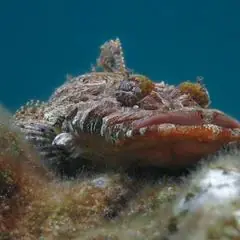
A well-camouflaged reef fish resting on an algae-covered rock.

Palau

Protecting resilient reefs in Palau

Potential locations of thermal refugia are being modelled across Palau’s waters. The resulting data will be incorporated into the country’s ongoing marine spatial planning process and used to inform climate-smart reef restoration projects.

A wooden fish trap standing in shallow water, with a school of small fish over seagrass below.

The Bahamas, Indonesia, Micronesia

Advancing sustainable finance for reefs

Through partnership with the Global Fund for Coral Reefs, TNC is implementing projects in The Bahamas, Micronesia, and Indonesia that leverage public, philanthropic, and private capital to strengthen marine protected areas, support reef-positive enterprises, and build sustainable blue economy opportunities.

Five actions governments can take now

We know what works, and where action matters most. Governments do not need to wait for a global consensus. They can act now by reducing local pressures, strengthening reef management and investing in protection that delivers for people, economies, and ecosystems.

1

Protect the reefs most likely to survive

Expand and strengthen Marine Protected Areas for identified climate-resilient reefs before they are lost.

2

Cut the pressures reefs can recover from

Reduce pollution, destructive fishing and damaging coastal development around priority reefs.

3

Back the communities already protecting reefs

Increase investment in Indigenous Peoples, local communities and reef stewards leading reef protection and recovery efforts.

4

Put resilient reefs at the centre of climate adaptation

Recognise coral reefs as essential infrastructure for food security, coastal protection, livelihoods and economic stability, and include them in national adaptation and resilience planning.

5

Invest where action can still make a difference

Use the latest science to prioritise funding, policy and protection where reefs have the greatest chance of surviving and recovering.

The High-Level Political Commitment on Climate-Resilient Coral Reefs

Launched and signed at the third UN Ocean Conference (UNOC3), this is the first global commitment dedicated to protecting climate-resilient coral reefs: the reefs with the strongest chance of surviving and recovering as the climate changes.

It gives governments a shared standard to work to. Rather than a general statement of concern, it focuses on specific reefs identified by science and asks signatories to treat them as national infrastructure worth protecting, funding and planning around.

By joining, governments commit to:

  • Protect reefs using the best available science.
  • Integrate climate-resilient reefs into national biodiversity and climate plans (NDCs, NBSAPs, 30x30).
  • Reduce local threats such as overfishing, pollution, and unsustainable development.
  • Mobilize new global finance for coral reef conservation.
  • Track and report progress through robust reef monitoring.
  • Ensure solutions are equitable, inclusive, and grounded in local stewardship.
24

signatories so far

Signatories include 23 national governments and one non-country signatory.

Who has signed

AustraliaBahamasBelizeBrazilComorosDominican RepublicFederated States of MicronesiaFijiFranceIndonesiaKenyaMadagascarMaldivesMexicoNew ZealandPalauPanamaPapua New GuineaSolomon IslandsTanzaniaTongaUnited KingdomVanuatuFrench Polynesia